

GUT HEALTH AND PLANT NUTRIENT COMBO SLOWS BIOLOGICAL AGEING
“Groundbreaking research published in the Journal of Ageing and Longevity 2026”
.
A landmark double-blind controlled trial has discovered a powerful nutritional intervention capable of slowing our biological clock. A specific combination of probiotics and plant-based phytochemicals improved three vital biological hallmarks of aging: Testosterone – Strength – Inflammation.
The rate of ageing is a complex interplay between our genetics, environment and lifestyle. As we age, systemic inflammation increases, grip strength declines and in men testosterone levels tend to fall – all of which are an estimate of our biological age. People who have a biological age greater than their chronological age not only look and feel older, they tend to feel fatigue, demotivated, forgetful and have a significant increased risk of life-impacting chronic degenerative disease such as arthritis, cancer, diabetes, stroke, heart disease and dementia.
Modifiable lifestyle factors which influence lifespan or more importantly Health span, include:
- Regular strength and aerobic exercise,
- Obesity,
- Calorie restriction,
- Anxiety and stress
- Sleep disturbance
- Pro-inflammatory ultra-processed sugary foods
- Dietary fibre
- Dietary phytochemical rich foods
- Fermented probiotic rich foods
Why phytochemicals and gut health strategies help
Phytochemicals found in colourful, aromatic herbs, spices, fruit and vegetables, have the ability to augment oxidative enzymes which protect our DNA from Reactive Oxygen Species (ROS). They also directly dampen excessive harmful inflammation but more recently their role in supporting the gut microbiome has become more apparent.
 The gut microbiome also deteriorates with age – becoming less diverse and more inflammatory. People with a poorer gut microbiome (dysbiosis) have impaired immune surveillance, more oxidative stress and higher whole body inflammation. In addition to these important defence pathways, it is increasingly recognised that dysbiosis is linked lower age adjusted testosterone levels and muscle strength.
The synergy between probiotics and phytochemicals:
High fibre, fermented, probiotic bacteria rich  plants supply the gut with the “healthy” bacteria but phytochemicals help them colonise, displace the unhealthy varieties and thrive. For example, the fibre and prebiotic phytochemicals found in broccoli, cranberries, tea, and ginger help the formation of short-chain fatty acids such as butyrate that provide energy for favourable bacteria as well as the cells lining the gut wall, improving integrity. Phytochemicals in pomegranate enhance the formation of a protective biofilm, facilitating adhesion, aggregation, and colony formation..
This synergy is mutual, as probiotic bacteria also aids the breakdown of phytochemicals into more readily absorbed, bioactive subunits, hence enhance their multiple health benefits.
The UK National Longevity Study
Rationale: Although data from laboratory and observational studies showing links between longevity, gut health and phytochemicals are convincing, what is less established is whether prospective nutritional interventions could slow the natural rate of decline. What’s more, previous studies have tended to look at these two nutritional powerhouses individually and not in combination.
Endpoints – It evaluated the impact, and explored the synergistic potential, of boosting phytochemical rich foods and lactobacillus probiotics on three key biomarkers of longevity. It was conducted at the Oncology Department of Bedford Hospital, part of the Cambridge University Hospitals network, in partnership with the Institute of Sport Science Bedford University, The Department of Urology and Epidemiology & Biostatistics, University of California and the Exercise Medicine Research Institute, Edith Cowan University, Australia.
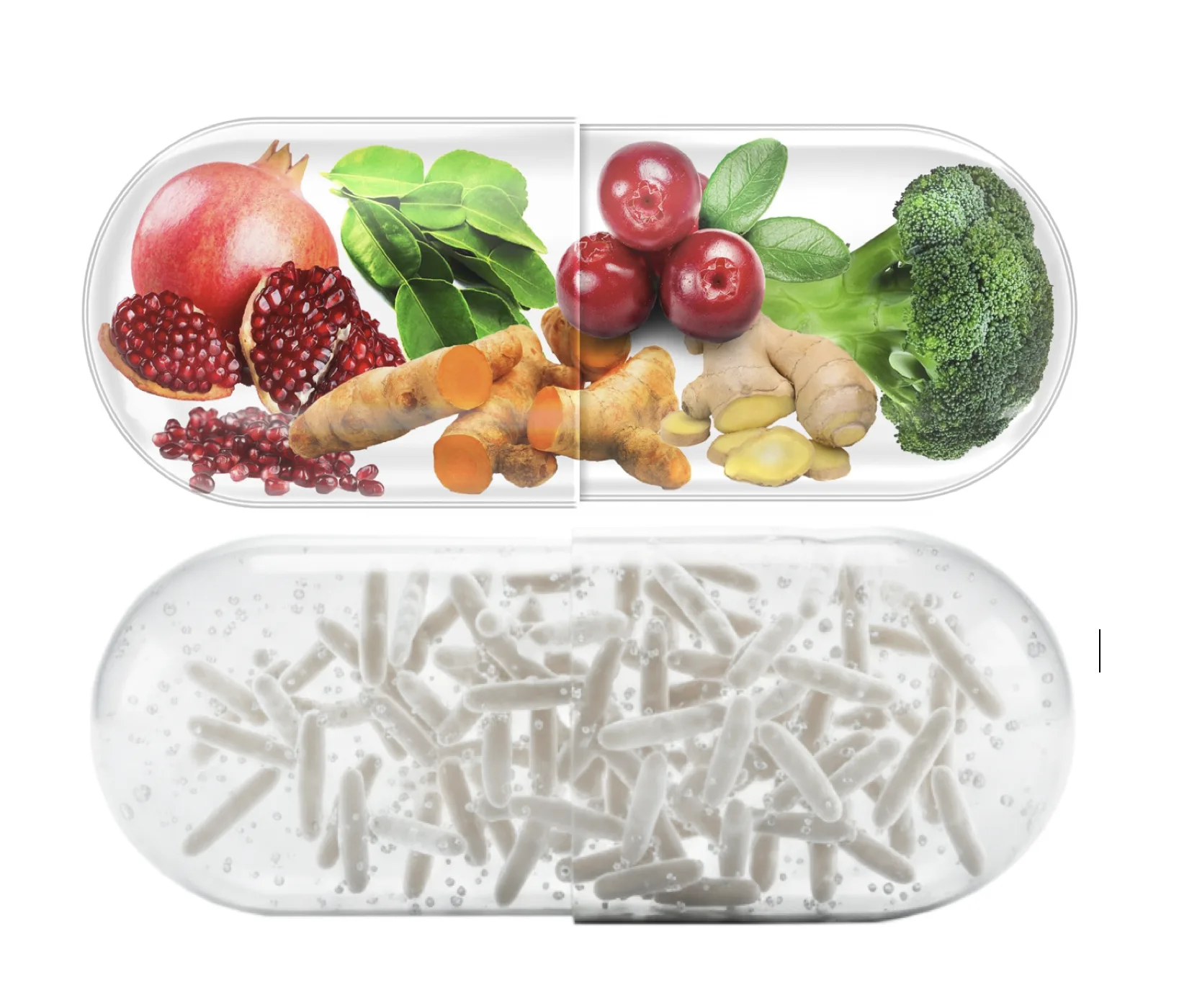 Design: 208 men with an average age 74 years were give two capsules a day of a phytochemical rich supplement (PRS) containing fortified broccoli, green tea, pomegranate, ginger, cranberries and turmeric (now called YourPhyto). In addition, they were randomised to take another 2 capsules containing either containing an inert placebo or an unique blend of 5-lactobacillus probiotics with built-in inulin prebiotic and vitamin D (now called Yourgutplus).
The results exceeded all expectations:
 Grip strength, measured with an Electronic Hand Dynamometer, improved by a statistically significant 7.8% from baseline to the end of the 4 month intervention. Many of the men in the study reported they felt stronger and fitter. Men randomised to also take the probiotics complex had an even greater (46%) improvement, confirming the synergistic benefits of dietary combination. This difference was highly statistically significant (P < 0.001, 95% CI: 3.6-5.2).
Systemic inflammation measured by the neutrophil to lymphocyte ratio was 29% lower in the combined arm. This difference was statistically significant (p= 0.04. 95% CI:0.03-1.53).
Testosterone. The average serum testosterone level at 4 months for men in combined arm was 12% higher. This difference was significantly significant (p=0.046, 95% CI 0.23 to 3.33 ng/l).
 Key conclusion and implications:

This nationally ethically approved, scientific trial has provided strong evidence that boosting dietary phytochemicals and lactobacillus with these specifically design capsules can reverse the physical and biological decline of three vital, measurable biomarkers of longevity. Although longer duration trials are planned, this novel data implies, these readily available practical nutritional tools would help support lifestyle strategies that could reduce biological age – hence help people live stronger and healthier for longer.
Reference:
Thomas, R.J.; Williams, M.; Aldous, J.W.F.; Kenfield, S.A.; Newton, R.U. The Effect of Boosting Dietary Lactobacillus and Phytochemical Rich Foods on Biomarkers of Longevity—A Phase II Randomised Placebo Controlled Trial. J. Ageing Longev. 2026, 6, 35. https://doi.org/10.3390/jal6020035