

Physical, mental and environmental factors all combine to disrupt a good nights sleep. Over time insomnia is linked to low mood and fatigue, a decline in self-esteem, relationship issues both at home and at work, an increased risk of chronic disease like dementia and cancer. This page provides tips to help you sleep and discusses the evidence and rational for over the counter medications and self help strategies, including the recently investigated new supplement PhytoNightplus
Identify and treat medical conditions which effect sleep:
Some of which can be addressed with lifestyle measures and some with specific treatments provided by your GP or medical team:
- Depressive – early morning wakening with dark thoughts.
- Aches in the joints
- Hot flushes (night sweats) or itching – see tips to help hot flushes
- Breathlessness when lying flat – heart failure
- Passing water more often (nocturia)
- Abdominal bloating and wind – tips to improve gut health
- Side-effects related to steroids and medical stimulants
 Self-help lifestyle tips
The general principles to help restorative sleep is to reduce cortisol and stress at night, elevate mood, natural melatonin levels and maintain a healthy circadian rhythm – the body’s natural body clock which slows cell metabolism at night and turns them on in the morning.
Light – Blue in the morning, red in the evening none at night: Blue light, triggers sensitive photoreceptors in the eyes and to a lesser extent skin. This is one explanation as to why we feel in a good mood when looking at a blue sea. In general, try to get as much natural light as possible during the day, but as a minimum, 15 minutes on a sunny day, or 30 minutes to an hour on a cloudy one, may do the trick. In the evening try to avoid blue light and sticking with red and yellow wavelengths, as well as keeping the overall light level much lower – keep your indoor lighting as dim as possible in the evenings with dimmer switches or by just turning on fewer lights, in conjunction with investing in red or yellow light bulbs for whatever lamps you use in the evening. If you plan to use a computer monitor or watch TV, there are two options. The first is to install a flux application on your computer, phones or tablets and set the screen brightness to the lowest setting. The second, and probably the best biohack, is to wear amber-tinted glasses for the last 2-3 hours of your day. Several scientific studies show that wearing amber-tinted glasses in the evening improves sleep quality and supports melatonin production. A more sophisticated option for getting both your bright blue light during the day and your dim red light in the evening is to use programmable light bulbs which allow you to set the colour spectrum and the brightness for the time of day. Once you go to bed, sleep in a completely dark room, cover up any LED lights on phones, toothbrushes, baby monitors, or whatever other gadgets you have plugged in and ditch the nightlights or switch to ones with red light bulbs. Blackout curtains help, If you need to use the loo at night, either learn to navigate in the dark or use as little light as possible.
Reduce and manage stress: You probably recognise cortisol as being the master stress hormone, but as mentioned above, it’s also a very important circadian rhythm hormone. This means that if you’re under stress, not only do you have all the effects of elevated and dysregulated cortisol to deal with, but you also disrupt your circadian rhythm. It would be worth exploring a relaxation resource developed by a UK doctor called Tranceform Medical . Other measures include; making changes to the structure of your work and social life, making time for regular exercise, taking up meditation or yoga, or simply making time for relaxing activities such as taking a bath – more tips
Aim for regular bedtimes and try to get enough sleep: Your melatonin starts increasing about two hours before bed to prepare your body for sleep. If you’re powering through that period with a sugary snack, a scary movie, or whatever else you do to keep yourself awake at night, you are affecting your circadian rhythms. Aim for 7-10 hours of sleep every night (most people need between 8 – 9 hours).
Physical activity: Exercise generally promotes good quality sleep and also helps reduce anxiety and depression. As little as 10 minutes of aerobic exercise, such as walking or cycling, can drastically improve nighttime sleep quality. For a good night’s sleep, most people should avoid strenuous workouts close to bedtime. However, the effect of intense nighttime exercise on sleep differs from person to person, so find out what works best for you.
Diet: Steer clear of heavy or rich foods, fatty or fried meals, spicy dishes, citrus fruits, and carbonated drinks, all of which can trigger indigestion in some people. When this occurs close to bedtime, it can lead to painful heartburn that disrupts sleep. Processed sugar in the evening is particularly bad for sleep as it causes peaks and troughs in blood sugar levels.
 Gut health: Bloating, wind, indigestion, intermittent constipation or diarrhoea can make you feel uncomfortable at night. These most often are related to an altered microbiome in the gut caused by an over growth of unhealthy bacteria. As well as these disruptive symptoms, poor gut health creates a state of excess inflammation around the clock which can disturb sleep directly. – see tips to improve gut health.
Manage your blood sugars: Many hormones are sensitive to swings in blood sugar, including both melatonin and cortisol. Prevent spikes in blood sugar levels by avoiding high glycemic foods and instead concentrating on complex carbohydrates and healthy fats, both of which will help you avoid hunger pangs overnight.
Eat melatonin-rich foods: Melatonin is made from serotonin, which in turn is made from tryptophan. Seafood is rich in tryptophan, and also has less of the other amino acids which compete with tryptophan to cross the blood-brain barrier, while citrus bioflavonoids in pomegranate, morello cherries and oragne are rich in the plant precursors of melatonin (known as phytomelatonins). Therefore, eating a diet containing seafood and cherries is a good way to boost production of both serotonin and melatonin. Seafood is also high in long-chain omega-3 fats which have been shown to improve general brain health and, subsequently, help support the body’s circadian rhythm. Ginger and turmeric also has phytomelatonin, so a good nightcap would be some grated ginger with hot water, a little lemon and mint.
Stay cool at night: The temperature that you’re sleeping in is a cue for your circadian clock. Ideally, your indoor temperature at night should be lower than temperatures during the day.
Change the alarm clock: Waking up to a jarring noise is very stressful. If you don’t have the luxury of sleeping until your body naturally wants to wake every morning (which is the best option for protecting your circadian rhythm and overall health), use a light alarm which gradually gets louder.
Cognitive behavioural therapy: CBT is highly recommended for Insomnia. It improves behaviours and sleep habits by identifying, and then changing the thought patterns and behaviours that affect a person’s ability to sleep or to sleep well. CBT can be performed by a clinical psychologist or a trained GP. It often involves the following steps:
- Stimulus-control therapy – associate the bedroom with sleep and establish a consistent sleep/wake pattern
- Sleep restriction therapy – limit the amount of time spent in bed to the actual amount of time spent asleep
- Sleep deprivation – controlled resistance may increase desire to sleep
- Relaxation training – reduce tension or minimise intrusive thoughts at night
- Paradoxical intention – stay awake and avoid any intention of falling asleep
- Biofeedback – sensors on your body help recognise muscle tension when you’re not relaxed
Sleep Hygiene Guidelines
- Reducing caffeine intake (tea, coffee, energy drinks) after 4 pm and preferably after 2 pm. If this does not help, try cutting these altogether
- Avoid sweet foods in the evening
- Alcohol may make you initially sleepy, but often then leads to a restless night. Try giving up drinking for 2 weeks to see if there is any improvement.
- Nicotine is a stimulant, so avoid smoking in late evening. Heavy smokers actually suffer withdrawal at night, leading them to wake up anxious and alert
- Avoid drinking large amounts of liquids prior to bedtime – it fills the stomach and causes you to have to pass water often
- Avoid hunger or excessive eating before bedtime
- Avoid taking daytime naps unless essential
- Establish a regular pattern of sleeping – set a time to go to bed and a time to wake up
- Sleep only as much as you need to feel rested
- Go to bed only when you are sleepy
- If you are unable to fall asleep within 20 – 30 minutes, get up and perform a relaxing activity until drowsy and ready for sleep (avoid exposure to light)
- It is important not to expose yourself to bright or artificial lights at night, particularly from smartphones or computers
- Exercise regularly, but do not exercise within 2 hours of bedtime
- Engage in a quiet relaxing activity before bedtime
- Do not watch exciting TV programs or read stimulating books in bed late at night – read something boring!
- Avoid temperature extremes
- Ensure the bedroom is dark – use blackout curtains if necessary
- Try to ensure the room is quiet – wear earplugs if necessary

.

.
Medical and over the counter interventions
Once an issue with sleep has been identified, removing distractions and improving comfort at night should be the first option taken. If these prove ineffective, the following treatments have been to shown to be capable of helping people get to sleep.
Sleeping tablets (hypnotics, Z-drugs) are medications that encourage sleep if insomnia is particularly severe. Doctors are, understandably, reluctant to recommend sleeping tablets in the long-term because they simply mask the symptoms without treating the underlying cause. These tablets become less effective over time, meaning users often wake up in the early hours, unable to get back to sleep.
Antihistamines typically used to treat symptoms of hay fever or other allergies, induce drowsiness by working against histamine, a chemical produced by the central nervous system. Many over-the-counter sleep aids contain antihistamines, but these sleep aids are intended to be used for only two to three nights at a time. Tolerance to the sedative effects of antihistamines can develop quickly. As a result, the longer you take them, the less likely they are to make you sleepy. Side-effects might include daytime drowsiness, dry mouth and dizziness. Also, diphenhydramine and doxylamine — sedating antihistamines found in various over-the-counter sleep aids — aren’t recommended for people who have closed-angle glaucoma, asthma, chronic obstructive pulmonary disease or severe liver disease. Recent studies have shown that anticholinergics might increase the risk of dementia. These drugs also have numerous side effects in older adults, such as confusion, hallucinations, dry mouth, blurred vision, constipation, nausea, impaired sweating, inability to empty the bladder completely (urinary retention) and rapid heart rate (tachycardia).

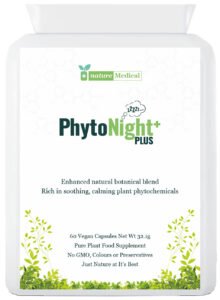
PhytoNight+
PhytoNight-plus+ is a novel, entirely natural, nutritional supplement which harnesses the calming, mood enhancing and health properties of purified, concentrated phytochemical rich whole plant foods. It was designed and developed by a scientific team from a Cambridge University Hospitals. It was one of the few supplements investigated in a double blind randomised trial and found to reduce day time fatigue and improve night time sleep among men and women suffering from long covid. this capsule does not just focus on sedation, like other herbal supplements, it prepares the body for a restful night by targeting 6 fundamental biological mechanisms which commonly interfere with sleep:
Chamomile has been used to treat sleep problems for years as it helps reduce anxiety and improve sleep quality. A cup of chamomile tea does not have sufficient quantities which is why trials of more concentrated extracts, as in phytonightplus or more convincing . Chamomile is generally regarded as safe when used as a tea or taken orally. Side effects are usually limited to rare allergic reactions are possible, particularly for people with allergies to related plants like ragweed and daisies.
Valerian: The pungent valerian plant has been used for sleep problems for years but there is little robust or convincing evidence for its effectiveness. The roots and stems of the valerian plant are made into teas, tinctures, capsules, extracts, and tablets. While each type of preparation has its fans, the tea can have an unpleasant odour, and researchers generally use liquid extracts or capsules in their research. Most people report that it is more effective once they have been taking it for several weeks. However, further research is needed to determine how effective valerian is in treating insomnia. Because experts have not located a single active compound, they speculate that valerian’s effect may be due to several compounds working together, or the amino acids GABA or glycine. Valerian is generally considered safe for adults. Side effects are rare and tend to be mild but may include headache, dizziness, itching, and stomach upset.
Melatonin (N-acetyl-5-methoxytryptamine) is licenced in the UK as part of a product called Circadin so can be prescribed by the GP but not available over the counter. It can be in the form of a ‘prolonged-release’ tablet which, ideally, shouldn’t be taken for more than a 13-week course. The release of melatonin correlates with the body’s cycle of day and night. The highest levels of the hormone are produced at night. Melatonin may play an essential role in relieving sleeping disorders, depression, and immune system deficiencies. As light inhibits its production, and darkness stimulates it, melatonin regulates the body’s internal clock. Double-blind research shows that this hormone helps people sleep, shortens the number of awakenings in the night, and improves the quality of sleep. It is also very useful in treating jet lag, as it promotes quicker recovery from that “out of it” stage one may experience after extended periods of flight. Research has also shown that having enough melatonin has positive psychological benefits on a person’s mood, while a lack of melatonin corresponds to anxiety, fatigue and hostility. The body produces some melatonin naturally during sleep, and many doctors and experts recommend a level similar to the body’s own production – between one to three milligrams taken before a person wants to go to sleep. Melatonin should not be taken during the day. Some uncommon side effects are reports of grogginess, sleepwalking, and disorientation. Pregnant or breast-feeding women should not take melatonin.
Aroma therapy: Essential oils are a good way to foster relaxation and better shut-eye. Many people choose to use a diffuser with essential oils to give their room a calming scent. One of the most popular scents for good sleep is lavender. Most studies on lavender’s efficacy as a sleep aid have focused on lavender essential oil, though some people also use the dried herb as a tea or in their pillow. Essential oils should not be ingested except under a doctor’s supervision, as even lavender oil contains poisonous compounds. Instead, the oil should be diffused into the air or diluted in a neutral cream or oil for use on the skin.
Hemp CB -D oil: Some studies have shown sleep improvements from using this natural oil which is commonly available in the UK. The usual way to use the oil is to place several drops under the tongue and wait 30-60 seconds before swallowing.
 Magnesium is a mineral naturally present in many foods, particularly beans and pumpkin seeds food. It is used throughout the body and is present in bones, soft tissue, and blood. Older adults are more at risk for magnesium deficiency, and one of the mineral’s many roles is sleep regulation. Some research suggests that supplemental magnesium (Mg) may help reduce insomnia in older adults, but the benefits are likely to be among people who had deficient levels to start with. Too high an intake of Mg can have side effects such as low blood pressure and irregular heart beat – so if considering a daily mineral supplement consider one which is well researched, with appropriate doses and robust quality assurance in manufacturing so correction of deficiency can take but without leading to excess levels – It also makes more sense to take all the essential minerals rather than just magnesium.
Gamma-aminobutyric acid (GABA) is an amino acid and neurotransmitter that plays a vital role in regulating nervous system activity. In addition to being made by the body and present in food like tea and tomatoes, GABA is available in supplement form. While it was previously believed that GABA taken orally could not pass in to the brain but more recent evidence suggest not. Small trials of synthetic supplemental GABA have shown that it could possibly reduce stress and may help people sleep More research is needed to investigate whether synthetic GABA is as effective as GABA derived from a natural source.
Glycine is an amino acid and neurotransmitter made by the body and available in some foods. Glycine appears help sleep by potentially by lowering body temperature. Taking glycine before bed may also help reduce the performance impact of insufficient sleep, which may be due to improved sleep quality or another mechanism. Supplemental glycine is available in capsule or powder form, and there is limited knowledge about what form might be most beneficial. While glycine is part of our diet, its safety is unknown when taken in the quantities usually found in supplements.
Collagen: Studies have suggested that collagen supplement help brain health Indirectly by helping to improve sleep quality. A 2023 crossover trial involving physically active men with sleep complaints found that taking collagen peptides before bed significantly reduced sleep fragmentation (awakenings). The morning following the improved rest, the participants exhibited higher cognitive function scores, specifically on Stroop cognitive tests (Thomas et al., 2023).